


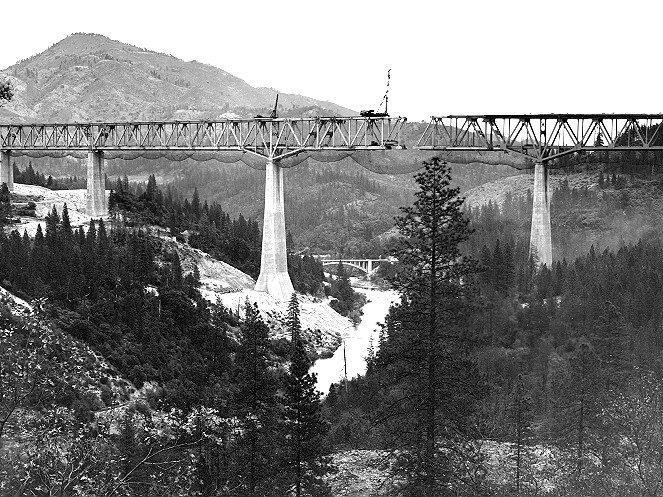
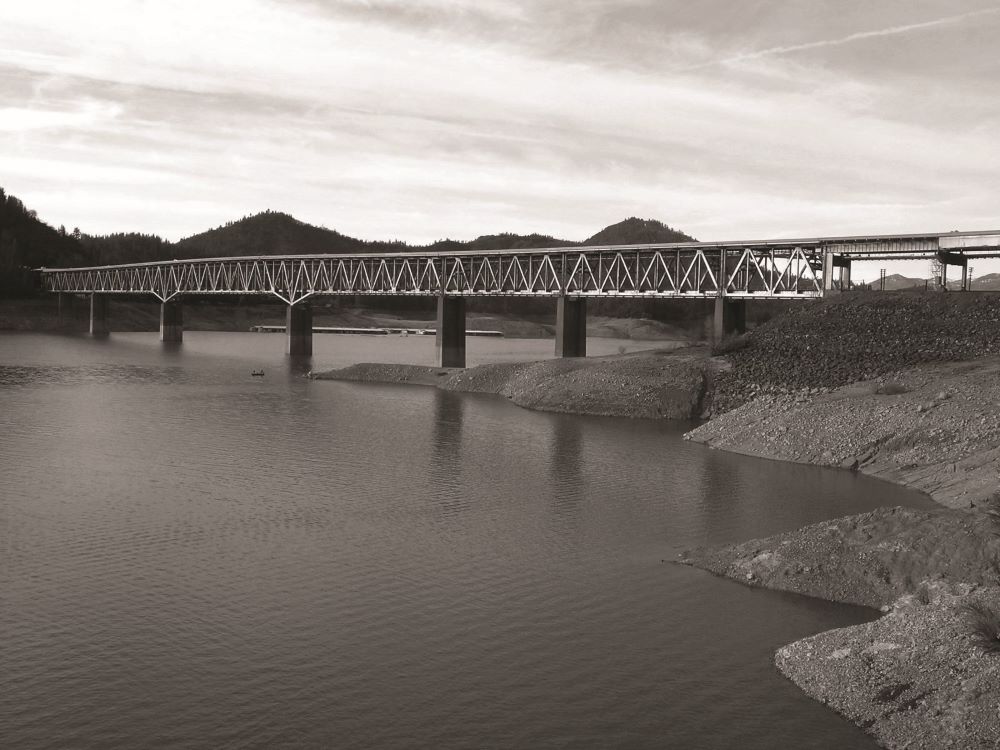
Completed in 1942 by American Bridge, the Pit River Bridge project consisted of constructing a 3,588-foot-long cantilevered truss, double-deck bridge with a double-track railroad on the lower deck and a 44-foot highway with two 26 sidewalks on the upper deck. The project spanned one year and seven months. Seven bents were used during falsework, with two made of bridge stringers on mud sills and five composed of truss members and bracing from the suspended span set on concrete foundations. Bent heights ranged from 45 feet to 280 feet, with the tallest being bent three at 280 feet and bent seven at 238 feetboth featuring back legs for added bracing. Concrete piers ranged from 35 to 102 feet deep, and the total steel weight for the bents was 1,997 tons. Erection of the main truss spans was done using an S2 derrick traveler, while a Jinniwink traveler erected the highway deck behind it, and locomotive cranes installed the girder spans. Two 60-ton and one 150-ton cranes were used. Steel erection began from the south end and advanced to one panel short of midspan, then continued from the north to achieve closure. Girder spans at each end were erected last. The superintendent was E. Nimmergood, and the field engineer was W.G. Bekerley.
Project Details
- Owner: Bureau of Reclamation, US Dept. of the Interior
- Location: Redding, California, United States
- Performed as: American Bridge Company
- Project value: $746,207.00
- Completion Date: July 1942